The Best Time for South Island Tours
When to book South Island tours: Kaikōura whale seasons, how early Tekapo gets dark in winter, snow on mountain roads and Oamaru penguin numbers by month.
There is no single best month: winter gives the longest stargazing nights and humpbacks off Kaikōura but snow on the passes; summer gives the most penguins at Oamaru and the easiest roads but late, short nights.
The guided days on this site run all year. What changes is what you are likely to see and how the roads behave. The South Island’s seasons are the reverse of the northern hemisphere’s: summer is December to February, winter is June to August. Wildlife and weather are never certain, and no operator promises them. The notes below come from the operators’ own listings and from official sources.
See dates for whale watching →
The year at a glance
| Season | Kaikōura whales | Tekapo nights | Mountain roads | Oamaru penguins |
|---|---|---|---|---|
| Summer (Dec to Feb) | Sperm whales; orca often seen | Dark only from about 11:30 pm in early December | Usually clear | Most birds: around 250 an evening in Nov and Dec |
| Autumn (Mar to May) | Sperm whales | Getting earlier | Chains on the Crown Range from May | 20 to 50 an evening |
| Winter (Jun to Aug) | Sperm whales; humpbacks frequently seen | Dark from about 7 pm | Chains on the Crown Range; passes can close | 20 to 50 an evening; birds arrive from 5:30 pm |
| Spring (Sep to Nov) | Sperm whales | Getting later | Chains on the Crown Range until September | Rising; nests busy with eggs and chicks |
Sources for the table: Whale Watch Kaikōura, timeanddate.com for Lake Tekapo, newzealand.com and the Ōamaru Penguins listing. Details follow.
Kaikōura: whales in every month, some species by season
Whale Watch Kaikōura says giant sperm whales are “the stars of the show and year-round residents”, and that a tour typically sees one or two whales. Humpbacks are seasonal: the operator says they are frequently seen in the winter months of June, July and August. Orca often visit in summer. The operator says a typical tour may also meet fur seals, pods of dusky dolphins and the wandering albatross.
So a sperm whale is the realistic aim in any month, and a winter trip adds a chance of humpbacks. A reviewer from the United States on the Christchurch day tour, October 2026: “Did see a humpback whale even though it’s not really the season.”
The sea decides more than the calendar. The cruise is subject to weather, and the minimum age of three depends on sea conditions at check-in. The whale watching flight is weather dependent too, and its listing says there are no refunds if whales are not sighted. Build in a spare morning if whales are the point of the trip. See Kaikōura whale watching.
Kaikōura had serious flooding in July 2026. State Highway 1 south of the town reopened in mid-July, and newzealand.com still asks visitors to check conditions before they travel.
Lake Tekapo: winter nights are long, summer nights are late
Lake Tekapo is in the Aoraki Mackenzie International Dark Sky Reserve, and the stars are there all year. What changes is when the sky gets dark. By timeanddate.com’s figures for Lake Tekapo:
- Early July: sunset about 5:12 pm, and astronomical darkness from about 7 pm.
- Early December: sunset about 9:07 pm, and full darkness not until about 11:30 pm.
- The longest day of the year is 6 hours 36 minutes longer than the shortest.
In winter you can be on a telescope tour soon after dinner. In summer the tours run late, and some go past midnight: both Dark Sky Project and Chameleon Stargazing remind you to check the date if you book a time after midnight. Every outdoor tour is cold at night in any season. The Mount John summit tour hands out extreme cold weather jackets, and Silver River includes down jackets.
Cloud is the risk in every month. Dark Sky Project offers an indoor alternative or a full refund when weather cancels its summit tour, and the indoor astronomy experience runs in all weather. Two nights at Tekapo double your chances. See Lake Tekapo stargazing.
Mountain roads: snow from May to September
- Crown Range Road. The shorter road between Queenstown and Wānaka is the highest main road in New Zealand. newzealand.com says to carry chains and know how to fit them if you drive it between May and September.
- Lindis Pass and the Mount Cook road. State Highway 8 over Lindis Pass and the road from Lake Pukaki to Mount Cook have closed overnight for snow in past winters, then reopened.
- On the tracks. The Hooker Valley tour listing warns that parts of the track can be icy in winter and that shoes with good grip are essential, and that cloud can hide Aoraki/Mount Cook in any season.
The guided days handle this for you up to a point. Cheeky Kea’s Christchurch Mount Cook tour runs in all weather except road closures and offers a refund if a closure stops it. See Mount Cook tours.
In Queenstown, the TSS Earnslaw has annual maintenance in early winter; in 2026 it ran from 18 May to 27 June, and the Walter Peak cruises used the Spirit of Queenstown instead. See Queenstown tours.
Oamaru: more penguins in summer, earlier evenings in winter
The Ōamaru Penguins listing says arrival numbers vary from over 200 in summer to under 30 in winter, and that viewing can be as late as 9 pm in summer while the penguins arrive home as early as 5:30 pm in winter. newzealand.com gives a similar picture: 20 to 50 birds an evening from March to August, and around 250 in the November to December breeding season, from a colony of 700 to 800 birds. Photography is not allowed during the evening viewing. See tours from Dunedin and Oamaru.
Christchurch: the tram changes hours
The tram listings give shorter winter hours. The tram, punt and gondola combo says trams run every 15 minutes from 9 AM to 6 PM in summer and 10 AM to 4 PM in winter. The listings also warn that the attractions get very busy from November to March, especially when a cruise ship is in port. See Christchurch tours.
So when should you go?
- For stargazing and humpbacks: June to August, with chains or a guided driver for the passes.
- For penguins and easy roads: November to February, accepting late nights at Tekapo.
- For a balance: the shoulder months, March to April or October, with no chains needed on the Crown Range and stargazing that starts earlier than in midsummer.
Then fit the guided days to the route: the itinerary by base town and guided tours or self-drive.
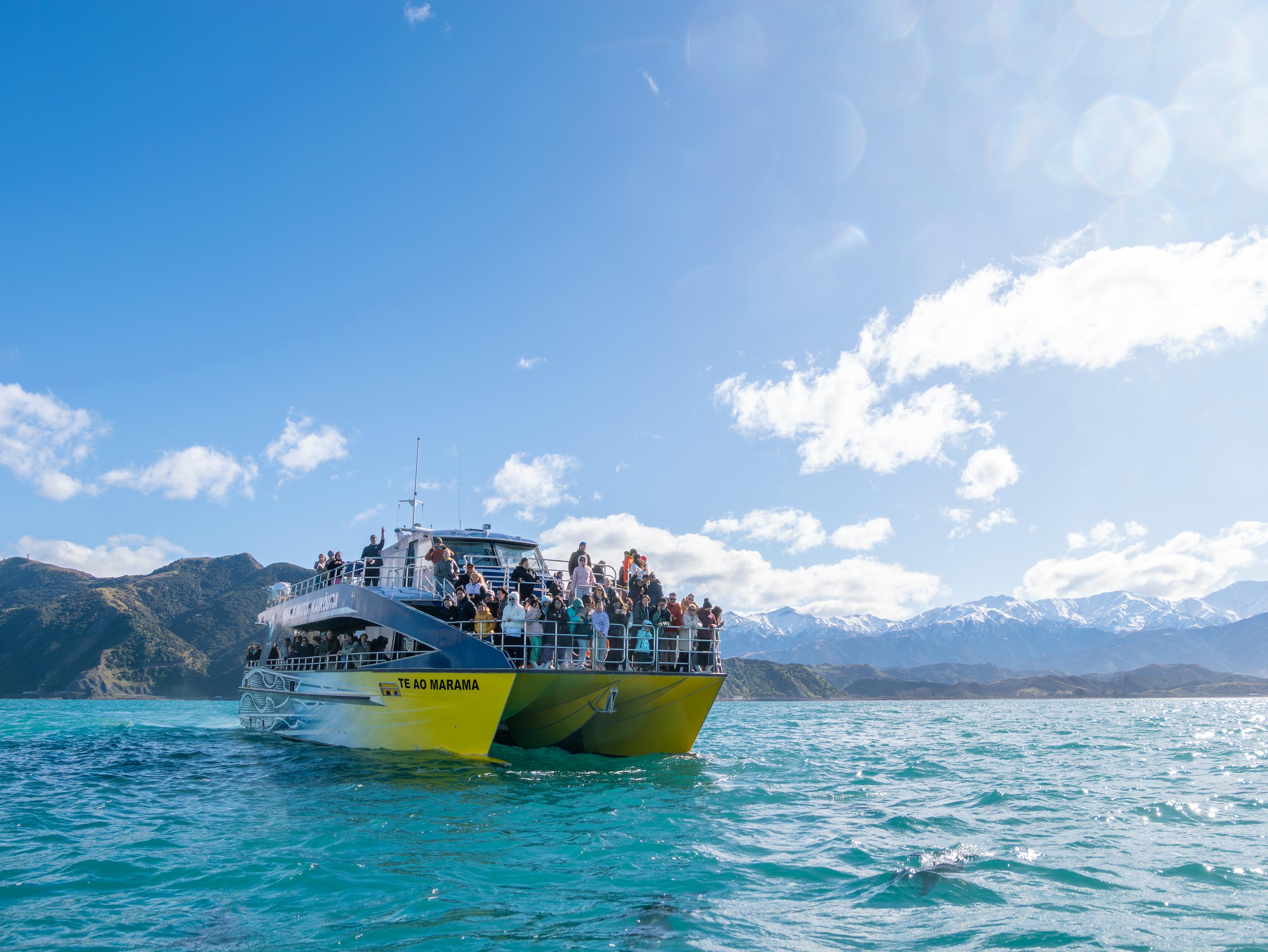
Book the Whale Watch Kaikōura Cruise
Whale Watch Kaikōura's own cruise: just over two hours on the water with narration by the crew, from the operator's office in Kaikōura. Allow 3 hours 15 minutes in total. Weather dependent; minimum age 3. Rated 4.6 from 3,823 reviews.
Check Availability & Book